Competences
Workshop facilitation
User research and data analysis
A/B and user testing
Project management and prioritisation
Structure, user flows and user experience
Product design
Prototyping and dev hand-off
KPI metrics, tracking and reporting
Team
Digital designer (Me)
Strategist (Me)
Developer
Key results
Research-led design
Guiding experience
Conversion pathway
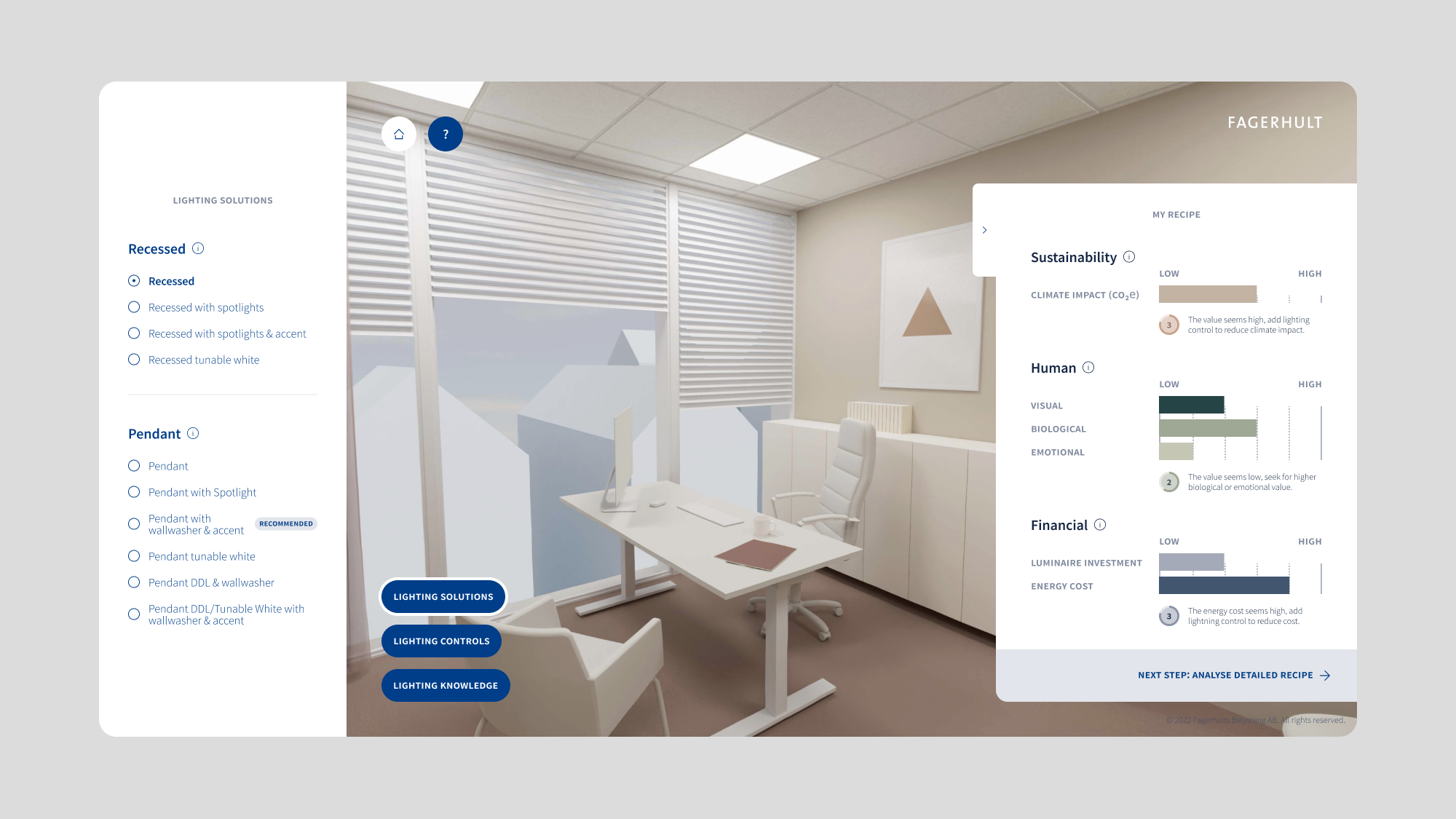
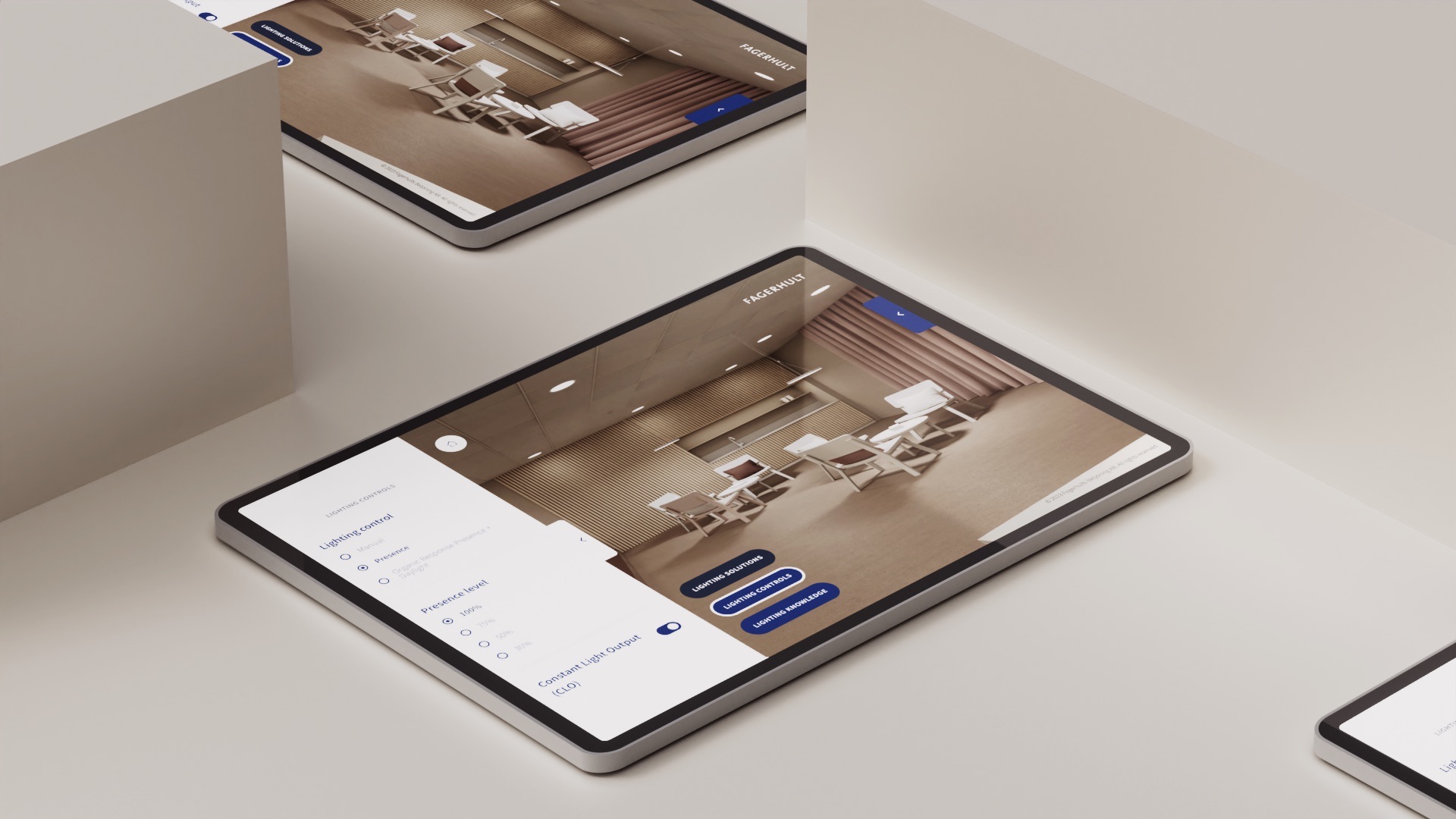
The Recipe of Light
The Recipe of Light is Fagerhult's digital tool where you can go into a room, configuring your lighting setup, and receive a personalised documentation how the lighting affect sustainabilite, human, and financial parameters.
My colleagues had built and launched the first version of the product, designed to be used by a Fagerhult representative alongside customers. My role was to come in with fresh eyes – analysing the existing product, validating what worked and what didn’t, and developing it further. The core challenge was clear: the tool needed to work without an expert present – so my focus was on adding the guidance and clarity needed to make that possible, resulting in a product ready for public launch.
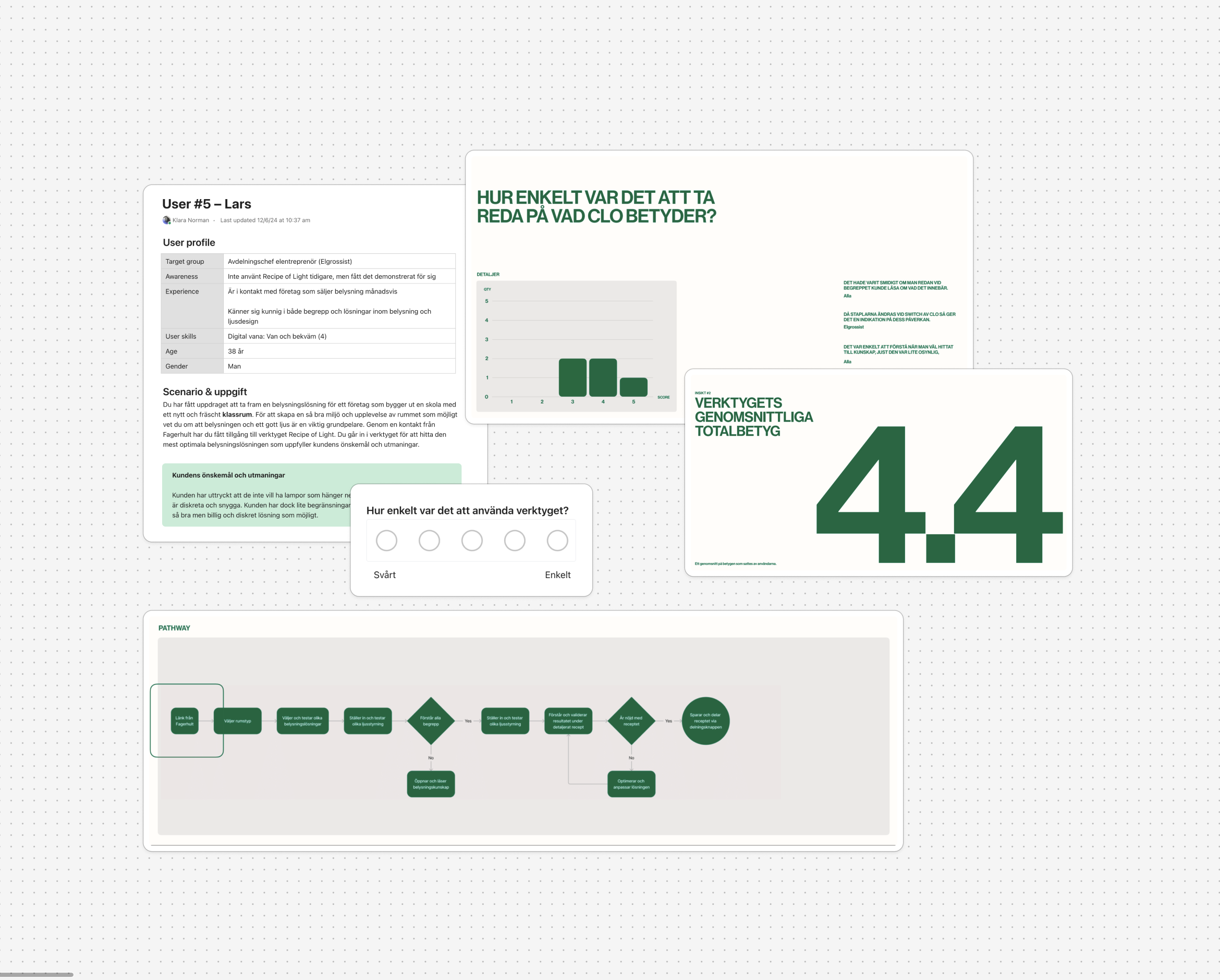
User testing the current product
The first step was conducting a user test on the existing product. The goal was to understand what was working, what wasn't, and what would be specifically needed for users to navigate the tool independently.
The findings were encouraging – the tool was intuitive and genuinely useful – but to work without an expert present, users needed more guidance: clearer feedback on their actions, tooltips, and accessible support throughout.
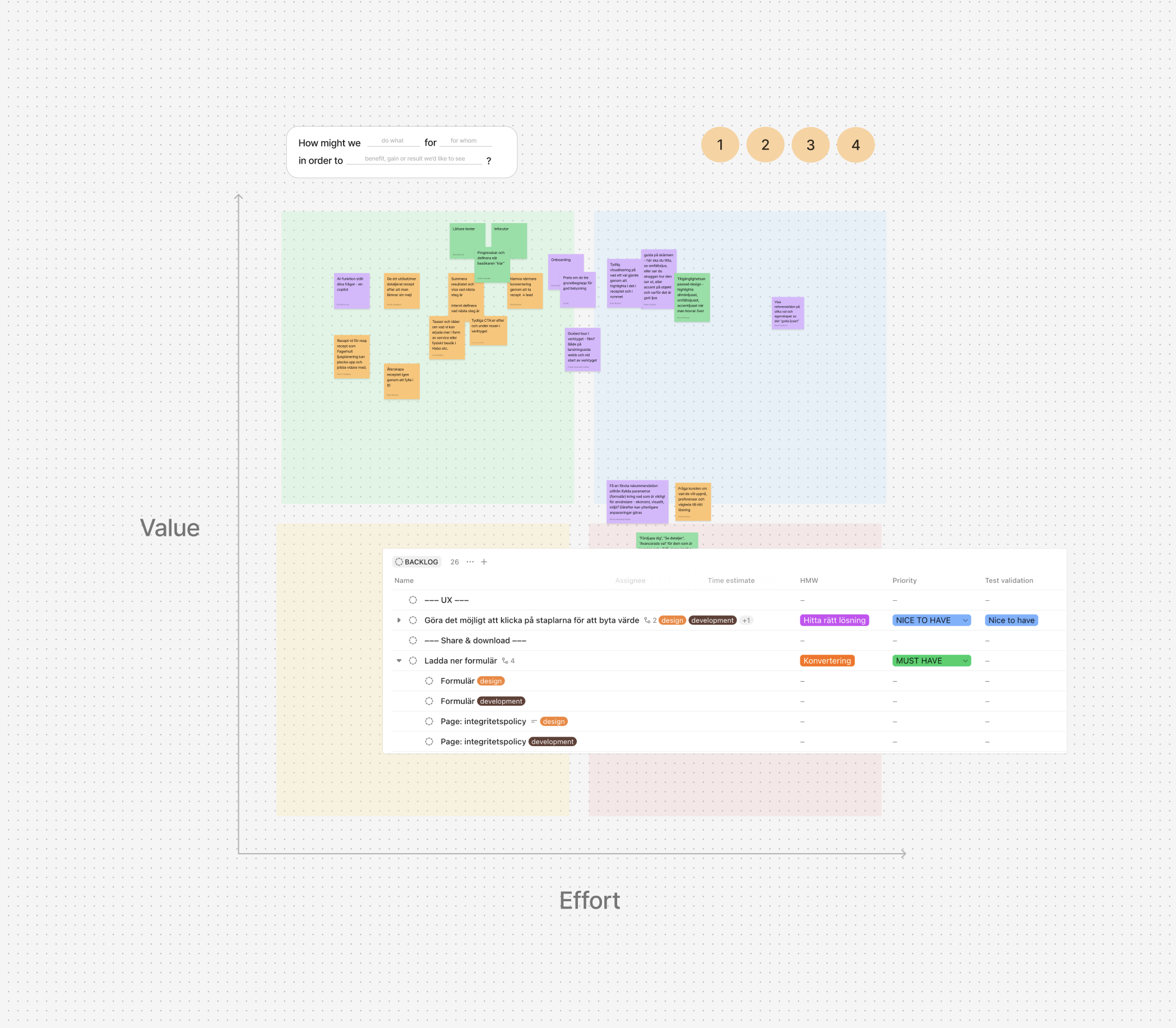
Workshop and direction
Alongside user needs, Fagerhult's business objectives also had to be considered. I facilitated a workshop with stakeholders and their team of lighting experts to gather their experience of the current product, align on objectives, and define the direction for the tool's development.
Combined with the user test findings, the workshop produced a prioritised list of actions based on value and effort. A key output was the importance of including a clear next step – a way of guiding users toward a conversion at the end of their experience.
As strategist and project lead, my role throughout was to recommend and prioritise actions – guiding the client through decisions on what to design and implement, and in what order.
Design and dev handoff
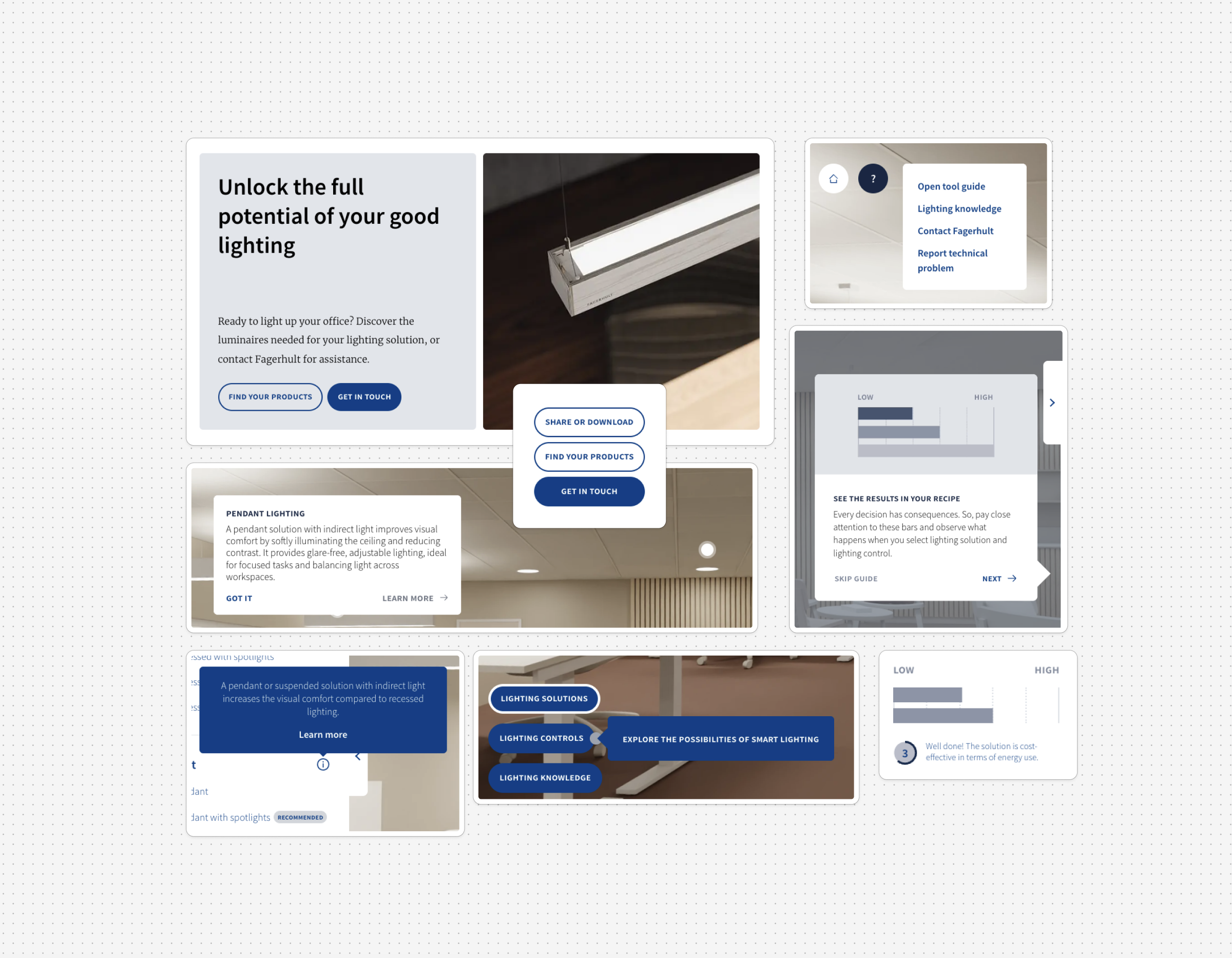
With guidance as the focus, the ideas were brought to life. An onboarding flow was designed to introduce first-time users to the tool's key features, alongside an accessible support hub. Additional guidance was layered in through tooltips on labels, recommended tags on options, and hotspots revealing detailed information about luminaires placed in each room.
To strengthen user feedback, attention-grabbing tips were added for users who hadn't discovered certain features, alongside validation indicators on the recipe to show what was performing well and what could be improved. At the recipe page, sticky buttons and a CTA section were introduced to signal the next step and drive users toward conversion.
The designs were built into a fully worked Figma prototype – making it easy to communicate decisions to the client, hand off to the developer, and validate with additional user tests. The result was a guided, action-oriented experience built for users navigating the tool on their own.